

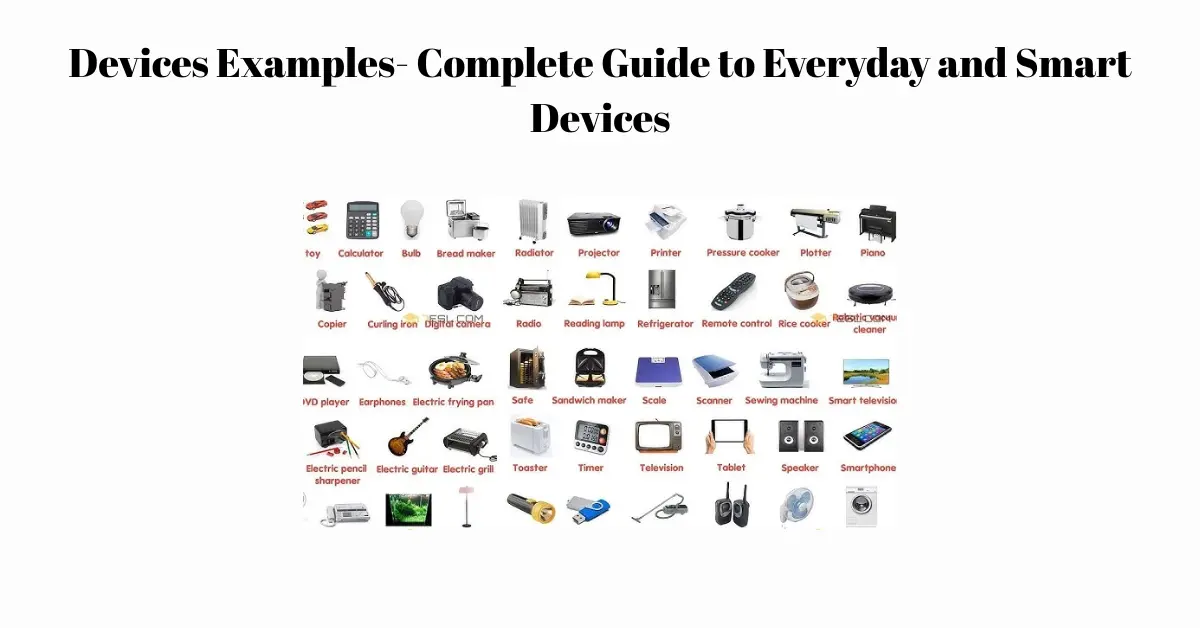
In today’s world, devices have become an essential part of our daily lives. From the smartphone in your pocket to the laptop on your desk, devices help us communicate, work, learn, and entertain ourselves. But what exactly counts as a device, and why is it important to know different devices examples? Understanding these examples not only helps us use technology more effectively but also gives insight into how innovation shapes our routines.
Devices are everywhere—at home, we rely on appliances like smart refrigerators and washing machines; at work, computers and printers keep our tasks running smoothly; and in schools, tablets and projectors make learning interactive and efficient. Recognizing the variety of devices around us helps in making informed choices, whether for productivity, convenience, or entertainment.
In this guide, we’ll explore a wide range of devices examples across different categories, showing real-world applications and helping you see technology from a practical perspective. By the end, you’ll have a clear understanding of the devices that impact your daily life and how they make modern living easier.
What Are Devices?

Devices are tools or instruments designed to perform specific tasks, making our lives easier, faster, and more efficient. They can be simple, like a thermometer that measures temperature, or complex, like a smartphone that connects you to the world. Essentially, a device is anything that serves a particular function using technology, mechanics, or a combination of both.
Understanding what devices are is important because they form the backbone of modern life. Every day, we interact with countless devices without even thinking about them—from the alarm clock that wakes us up in the morning to the computer that helps us work, learn, or entertain ourselves. By knowing what qualifies as a device, you can better appreciate the role technology plays in simplifying tasks, improving communication, and enhancing productivity.
In the following sections, we’ll dive into devices examples across different categories, showing how they function in real-world settings and why they matter in our daily routines.
May be you like it :
Devices Gmail – How to Access and Manage Your Gmail Account on All Devices
Software Manager Jobs – Roles Skills Career Growth and How to Land One
Software Update in Spanish – Step-by-Step Guide to Latest Updates
Software Languages – Top Programming Languages Tips and Future Trends
Software NAICS Code – Guide to Industry Classification and Government Reporting
Types of Devices
Devices come in various types, each serving unique purposes in our daily lives. Understanding these categories helps you recognize how technology is applied in different settings. Here are the main types of devices along with examples:
Electronic Devices
Electronic devices use electricity to function and are often digital or programmable.
Examples: Smartphones, laptops, tablets, televisions, smartwatches.
Usage: Communication, work, entertainment, and information access.
Mechanical Devices
Mechanical devices operate using physical mechanisms rather than electricity.
Examples: Clocks, bicycles, fans, manual can openers.
Usage: Performing physical tasks, transportation, and household operations.
Electrical Devices
While similar to electronic devices, electrical devices primarily use electrical energy to perform work, often without complex circuits.
Examples: Refrigerators, microwaves, heaters, washing machines.
Usage: Home appliances, food preparation, and household maintenance.
Digital Devices
Digital devices process information in binary form and are often connected to networks.
Examples: Computers, digital cameras, e-readers, game consoles.
Usage: Data processing, communication, entertainment, and learning.
Smart Devices
Smart devices are connected to the internet or other devices, offering automation, remote control, and advanced features.
Examples: Smart thermostats, smart lights, voice assistants, wearable fitness trackers.
Usage: Home automation, health tracking, and convenience.
By understanding these types, you can see how devices impact nearly every aspect of modern life, from simple household chores to complex work tasks. Later, we’ll explore real-world devices examples to give you practical insights.
May be you like it :
Devices Mockup – Create Realistic Digital Mockups with Templates
Devices MAC Address – What It Is How to Find It and Why It Matters
Devices Meaning Explained – Definition Types Examples and Uses
Devices Examples- Complete Guide to Everyday and Smart Devices
Entertainment Technician Jobs – Careers And Opportunities
Devices Examples in Everyday Life
Devices are all around us, making tasks simpler, faster, and more efficient. Let’s explore some practical examples in different areas of daily life:
At Home
- Kitchen Appliances: Refrigerators, microwaves, blenders, and coffee makers help with cooking and food storage.
- Cleaning Devices: Vacuum cleaners, washing machines, and robotic cleaners save time and effort.
- Entertainment Devices: Televisions, smart speakers, and gaming consoles provide relaxation and fun.
At Work
- Computers and Laptops: Essential for communication, document creation, and data processing.
- Printers and Scanners: Facilitate paperwork, record-keeping, and office operations.
- Projectors and Video Conferencing Tools: Enable presentations and remote collaboration.
At School or Learning Environments
- Tablets and Laptops: Support interactive learning and online research.
- Smartboards and Projectors: Make teaching more engaging and visual.
- Educational Gadgets: Calculators, digital microscopes, and e-readers help students understand complex topics.
On the Go
- Smartphones and Wearables: Keep us connected, track fitness, and provide navigation.
- Portable Chargers and Power Banks: Ensure devices stay powered while traveling.
- GPS Devices and Smart Watches: Assist in navigation and time management.
These examples show how devices integrate into nearly every aspect of our lives, enhancing convenience, productivity, and entertainment. Understanding these devices examples not only helps in making informed choices but also demonstrates the role technology plays in shaping modern lifestyles.
May be you like it :
What Is Tech 2 – Definition Applications Benefits and Future Trends
Entertainment Technician – Career Guide Skills Tools And Opportunities
Fun Tech Facts – Amazing Surprising and Cool Technology Trivia
Tech Game Today – Latest Trends Innovations And Future Insights
Tech Earnings This Week – Key Reports Market Trends And Investor Insights
Benefits of Using Devices
Devices play a crucial role in making our daily lives easier, more efficient, and more connected. Here are some key benefits of using devices:
Enhanced Productivity
Devices like computers, laptops, and smartphones allow us to complete tasks faster and more accurately. Whether it’s at work, school, or managing personal tasks, these tools help save time and effort.
Improved Communication
Devices such as smartphones, tablets, and video conferencing tools enable instant communication across the globe. Staying connected with family, friends, and colleagues has never been easier.
Convenience and Automation
Smart devices like home assistants, smart lights, and robotic cleaners automate daily tasks, reducing manual effort and making life more convenient.
Access to Information and Learning
Digital devices provide easy access to vast amounts of information and educational resources. Tablets, laptops, and e-readers help students and professionals learn, research, and stay informed.
Entertainment and Leisure
From gaming consoles to smart TVs and streaming devices, technology offers endless ways to relax and enjoy leisure time.
By understanding the benefits of devices, it becomes clear why knowing devices examples is valuable—not just for tech enthusiasts, but for anyone navigating modern life. These advantages show how integrated devices have become in personal, educational, and professional settings.
Choosing the Right Devices
With so many devices available today, selecting the right ones for your needs can be overwhelming. Understanding what to look for ensures that you get the most value and efficiency from your technology. Here are some tips to help you make informed choices:
Identify Your Needs
Before buying a device, consider what you need it for. Are you looking for productivity, entertainment, learning, or home automation? Knowing your purpose helps narrow down options.
Consider Compatibility
Ensure that the device works well with other tools or systems you already use. For example, smart home devices should integrate smoothly with your existing apps or voice assistants.
Check Features and Specifications
Look at the features that matter most to you. For electronic devices, this could be battery life, processing power, or storage. For mechanical or electrical devices, durability and ease of use might be key factors.
Read Reviews and Ratings
User reviews and expert ratings provide insight into the device’s performance, reliability, and potential issues. This step helps you avoid costly mistakes.
Consider Future Needs
Technology evolves rapidly. Choosing devices that can adapt to new software updates or additional features ensures long-term usability.
By following these steps, you can confidently select devices that suit your lifestyle, work, or learning environment. Understanding devices examples and their applications makes this process even easier, allowing you to make informed decisions.
Conclusion
Devices are an integral part of modern life, helping us communicate, work, learn, and entertain ourselves efficiently. From simple mechanical tools to advanced smart devices, understanding devices examples allows us to appreciate how technology shapes our daily routines.
By exploring the different types of devices—electronic, mechanical, digital, and smart—you can see their applications in homes, workplaces, schools, and even on the go. Knowing their benefits, such as enhanced productivity, convenience, and access to information, makes it easier to choose the right devices for your needs.
Whether you are selecting a new gadget for personal use, setting up a smart home, or equipping a classroom, being familiar with devices examples helps you make informed decisions. By recognizing the role devices play in everyday life, you not only improve efficiency but also stay ahead in a technology-driven world.
Embracing the right devices enhances your lifestyle, simplifies tasks, and opens opportunities for learning and growth. Understanding them is no longer optional—it’s essential in navigating modern life with confidence.
May be you like it :
Tech Quotes – Inspirational And Famous Quotes To Motivate Innovators
Tech Index Funds Guide 2025 – Best Technology Funds For Long Term Growth
Tech Neck Symptoms – Causes Prevention And Effective Treatments
Entertainment Information – Latest Updates on Movies Music TV and Celebrities
